Your base location in Palworld decides how fast you automate, how safe your Pals are from raids, and, on a dedicated server, how much memory your host quietly burns keeping all your working Pals simulated. After running Palworld dedicated servers since launch and through every base-cap and memory patch since, these are the spots on the Palpagos Islands that consistently pay off in 2026, with the server cost of each one spelled out so you build something your hardware can actually hold.

What Actually Makes a Base Location Good
Pretty views do not run a base. On a real server, three things decide whether a spot is worth your Palbox:
- Resource nodes in range: how many ore, coal, stone, and sulfur nodes sit inside your base radius, because that is what saves you the manual grind
- Flat buildable ground: how much terrain you have to fight before you can place production lines and a Pal-friendly pathing layout
- Server footprint: how many working Pals and structures the spot tempts you into, which is the single biggest driver of a Palworld server's memory use
That last point matters more in Palworld than in almost any other survival game. The dedicated server holds every working Pal's AI and pathing in memory, and a base crammed with the maximum Pal count on top of a dozen ore nodes will climb in RAM far faster than a lean, well-pathed base. On the servers we host, the bases that stay smooth are the ones that automate deliberately, not the ones that jam every slot full. If your server's memory keeps creeping up, our guide to fixing Palworld memory leaks and crashes covers the settings that help. Location sets how tempted you will be to overload.
Best Starter Base: The Plateau Near the Plateau of Beginnings
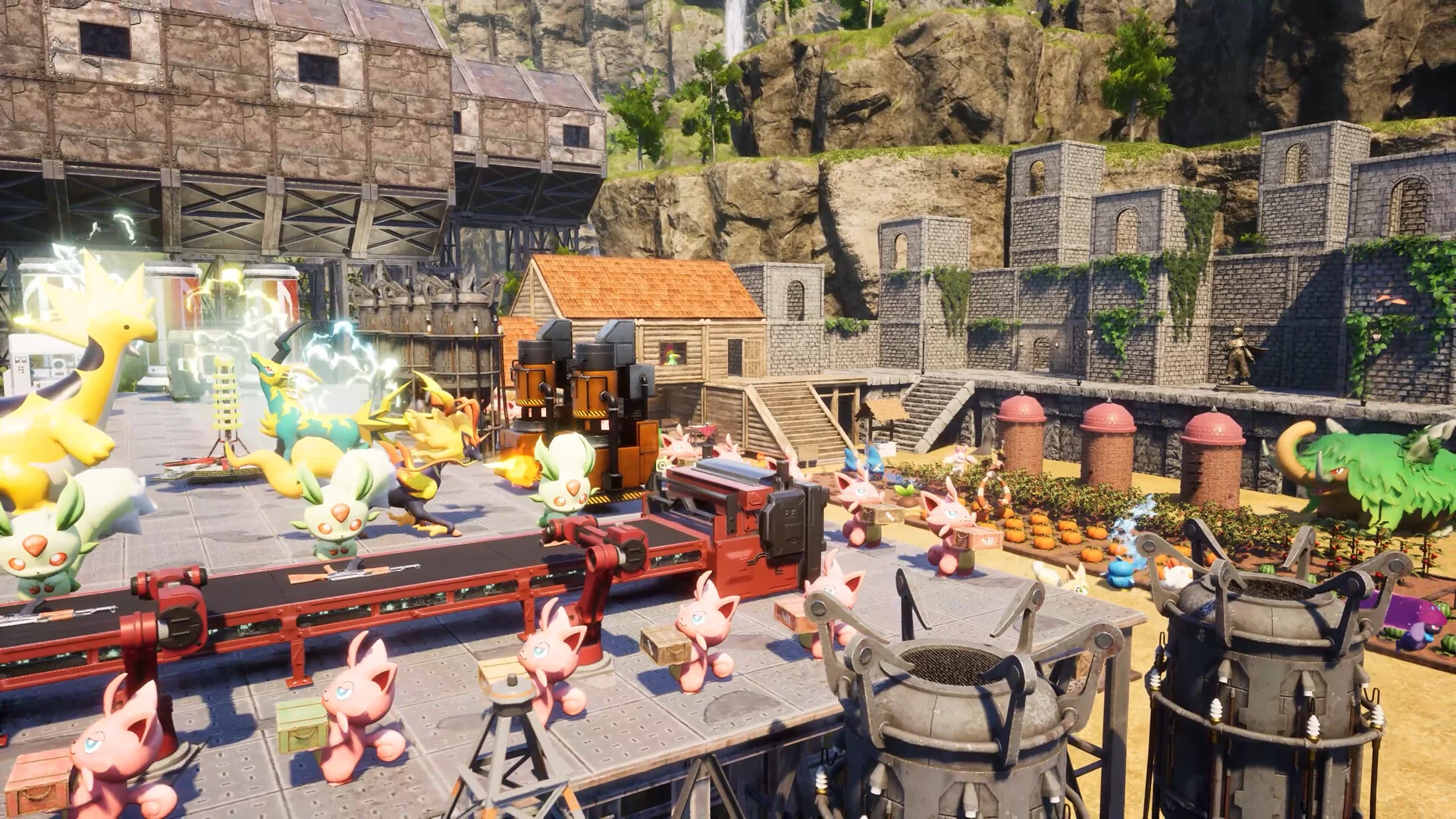
The flat plateau a short walk from your first fast-travel point is still the best opening base in 2026, and it is the one we point new players to on a fresh server. It is genuinely flat, so you skip the terrain fight and get production running on night one, it sits near stone and a little ore for your first upgrades, and the gentle local Pals mean low early raid pressure while your team is still weak.
Why it works on a server:
- Flat ground means a clean Pal pathing layout, which keeps the AI cheap to simulate and stops Pals getting stuck (a stuck-Pal loop is a quiet CPU drain)
- Low local threat means fewer raid events early, so your server is not constantly spawning attackers
- Central enough to reach the rest of the map without a marathon trek
Start a new server's players here. They get automating fast and your memory graph stays flat while everyone learns the loop.
Best Ore and Coal Base: The Node Cluster by the Bamboo Groves
Once you need real metal, the move is to a base built on top of a tight cluster of ore and coal nodes, the kind found around the Bamboo Groves region. Sitting your Palbox where six or more nodes fall inside the base radius turns mining from a chore into a passive drip, and coal access early unlocks refined ingots without a long haul.
The trade-off is the temptation to over-Pal it. A node-rich base wants a big mining and smelting crew, and that Pal count is exactly what pushes server memory up. Build it, but cap your worker count deliberately rather than maxing it: a node base running a lean crew outperforms a maxed one that drags the whole server's tickrate down for everyone.
Best Sulfur and Volcano Base: The Desert and Mount Obsidian
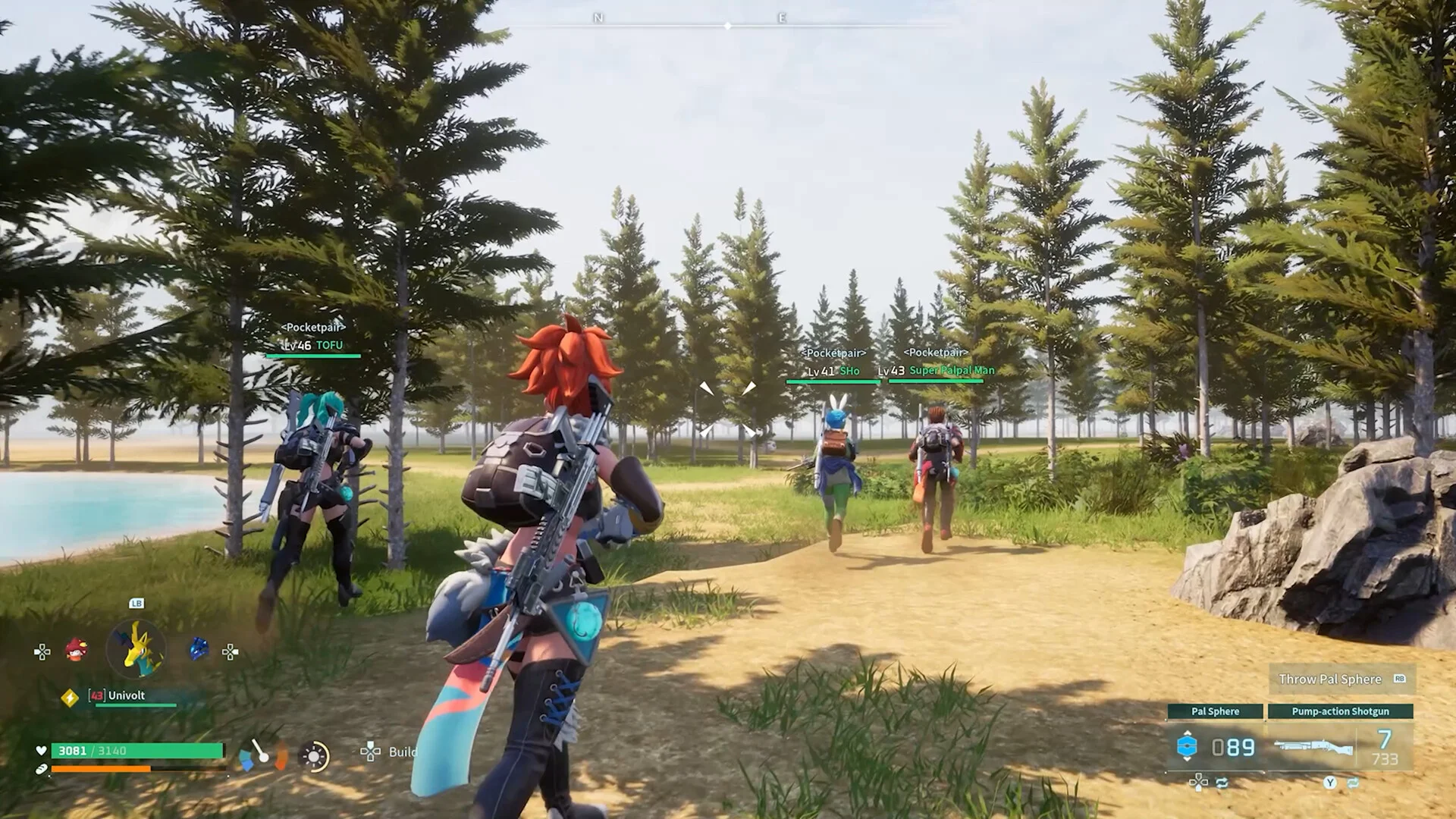
Sulfur is the resource that gates gunpowder and the mid-to-late game, and it lives in the desert and around the Mount Obsidian volcano. A second base out here on a sulfur cluster keeps your ammo and Cement pipelines fed without constant supply runs from your main. The volcano region also spawns the fire Pals you want for that base's work suitability.
The cost is environment and distance. The desert and volcano cook unprotected Pals and players, so plan heat-resistant gear and a base layout that keeps your crew in the shade of structures. For server owners, a far-flung sulfur base is fine precisely because you should keep it lean: a focused two-job base out here costs your hardware almost nothing compared to a sprawling main.
Best Cold Base: The Northern Mountains

The far northern mountains are where the ice Pals live, and a base up here gives you cooling work suitability and access to the high-level Pals you will want for late-game catching. It is a specialist base, not a main, but for a server group pushing the endgame, a northern outpost saves a lot of round trips.
Bring cold-resistant gear and accept that this is a low-comfort posting. Keep it to a small, purpose-built crew. The pattern that keeps a Palworld server healthy is several lean, specialised bases rather than one giant base trying to do everything, because spreading a fixed Pal budget across bases paths better than concentrating it in one overloaded spot.
Best Multiplayer and Raid-Ready Base: A Single-Approach Cliff

On a shared server with raids enabled, the same rule as every survival game applies: cut your approach angles. A base backed against a cliff or raised on high ground with one ramped entrance funnels raid waves and hostile players into a single defendable lane, so a handful of combat Pals and a wall hold what an open base never could.
Server-side, a tight defensive base is also a lighter base. Walling one approach needs far fewer structures than boxing in an open field, and fewer structures means less for your server to simulate during a raid event, which is exactly when the tickrate is under the most pressure. Defensible and cheap-to-run are the same build in Palworld.
The Three-Base Strategy
Palworld lets you run multiple bases, and the healthiest setup for both gameplay and server performance is to specialise them: one flat production main, one node base for ore and coal, and one resource outpost (sulfur or ice) for whatever the late game demands. Spreading your total Pal budget across three lean bases paths better and uses memory more evenly than stuffing every worker into one mega-base. On a dedicated server, three focused bases of 12 Pals each consistently run smoother than one base of 36.
Locations to Avoid
- A steep slope you have to terraform flat: heavy ground editing and bad Pal pathing, a double cost in effort and server load
- Right on top of an Alpha Pal spawn: constant aggro pulls and a crew that keeps wandering into a fight
- A spot with no flat radius for production: Pals path badly around obstacles, get stuck, and quietly eat CPU
- One giant base maxed on Pal count: the fastest way to climb a Palworld server's memory into crash territory
Server Settings That Change the Best-Base Calculus
The right location depends on your server config:
- High base Pal count cap: you will be tempted to overload, so spread across specialised bases and keep each crew lean
- Raids enabled: favour a single-approach cliff over an open field
- Multiple bases allowed: use the three-base specialisation pattern instead of one mega-base
- Higher difficulty or PvP: defensibility outranks node count, pick the cliff
On DoomHosting Palworld servers you can change the base Pal count, raid settings, difficulty, and day length from the Pterodactyl panel without a restart, so test how a location feels under your own caps before the group commits to it.
Host Your Palworld Server with DoomHosting
Rent a dedicated Palworld server from DoomHosting on Ryzen 9 hardware with full FTP access, DDoS protection, one-click backups, and 24/7 support. Tune base Pal counts, raids, and difficulty from the panel, and host in North America or Europe for the lowest ping. Whatever spot you pick, build it lean: the best base in Palworld is the one that automates what you need without dragging your server's memory toward a crash, not the one with a Pal jammed into every slot.