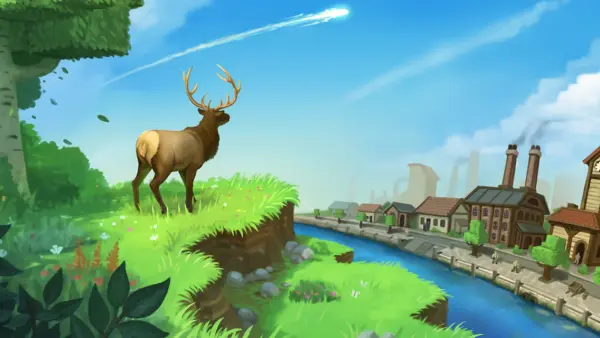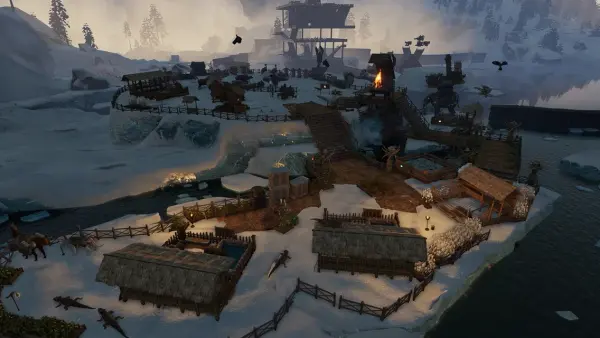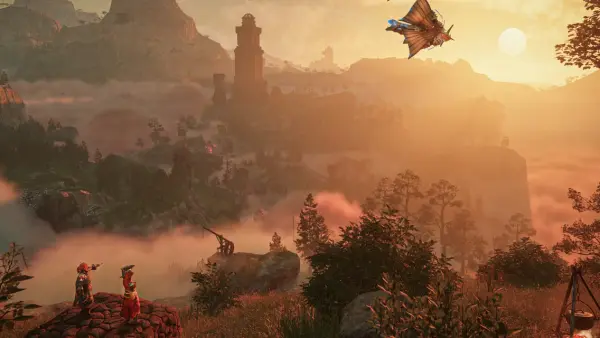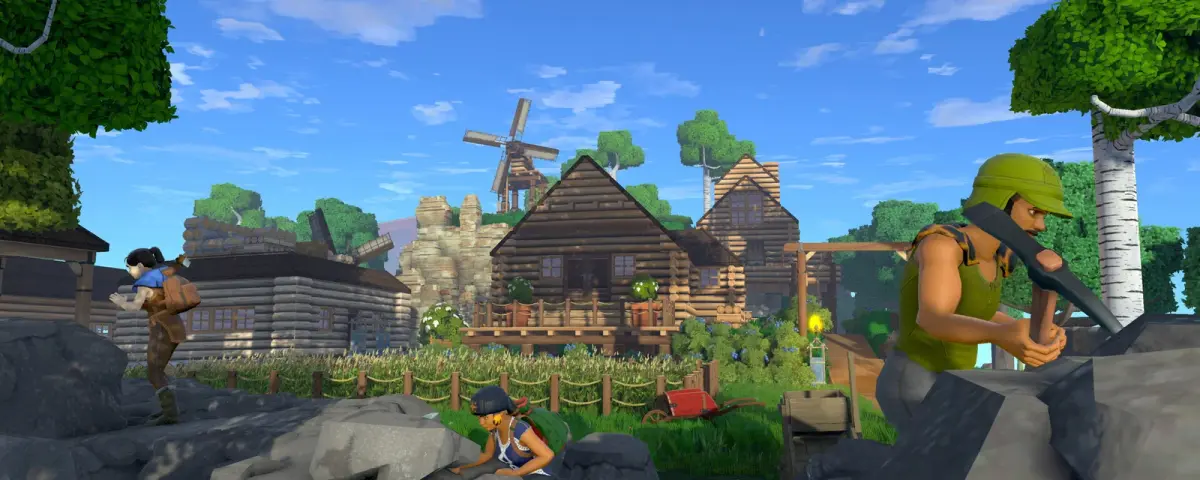
Eco does not really work like the survival games it sits next to on a store page. You do not spin up a server, play an evening, and wipe it when things get messy. An Eco world is one continuous experiment that a group of people live inside for weeks: plants regrow at a rate your logging is quietly changing, animals breed or do not, laws get written and voted on, someone opens a shop and sets prices, and a meteor is on its way the entire time. Almost everything that decides whether that experiment reaches a satisfying ending is decided in the first ten minutes, before anyone has placed a single block. This guide is about those decisions.
An Eco Server Simulates, It Does Not Just Host
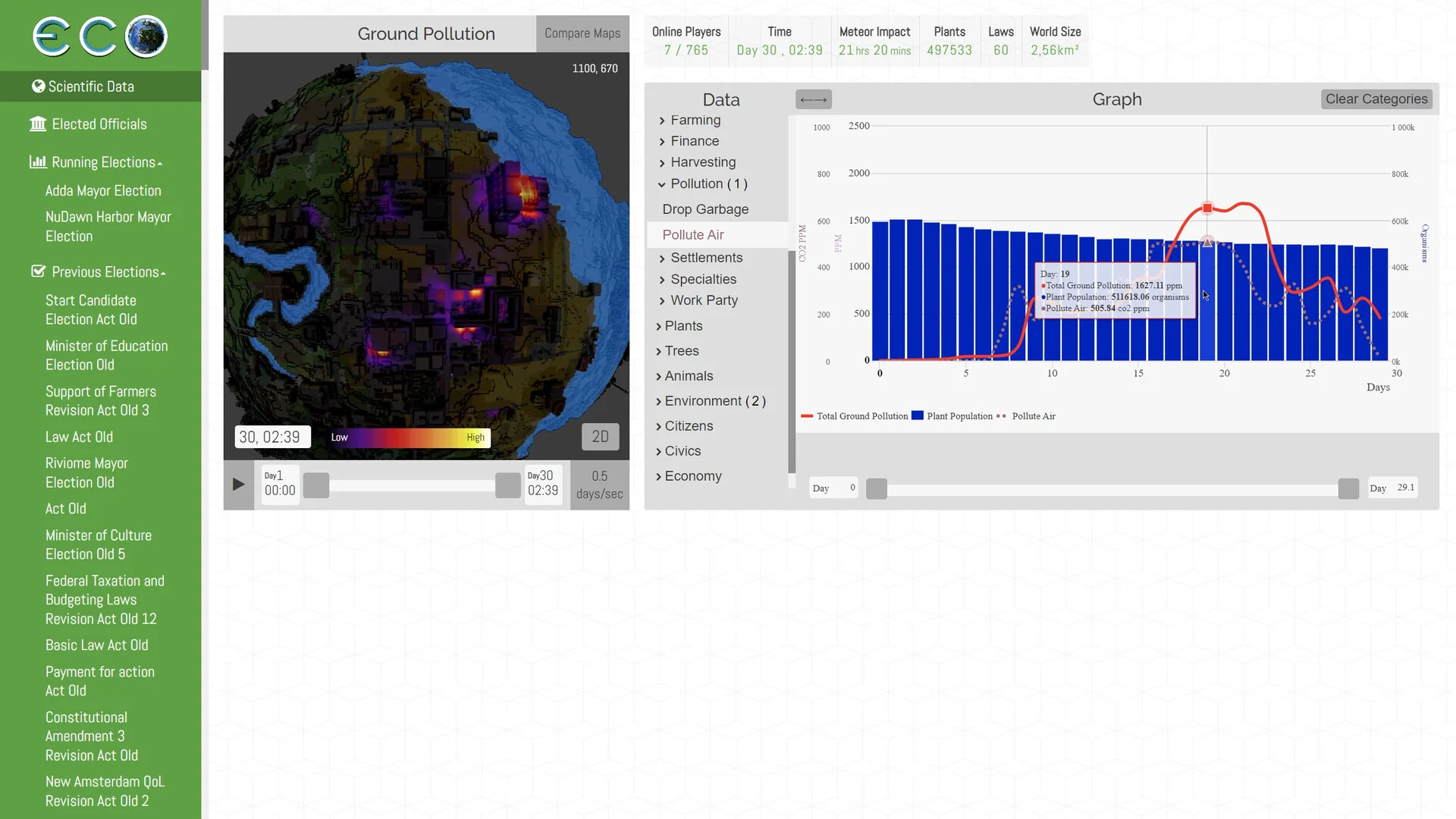
Most game servers spend their idle time doing nothing at all. An Eco server spends it growing plants, spreading pollution, moving animals and accounting for every ton of tailings your smelters produced. That work continues whether anyone is logged in or not, and Update 14 (released 6 August 2026, with hotfixes 14.0.1 through 14.0.3 landing over the following week) added more of it. Garbage, recycling and a reworked pollution model are all persistent world state that has to be ticked.
Two practical consequences follow from that:
- Clock speed beats core count. Eco's world simulation is effectively single threaded, so a server with a high per core frequency will outperform a machine with twice the cores at a lower clock. This is the one hardware spec worth being fussy about.
- RAM scales with world size and world age, not just with players online. A small group on a default world is comfortable around 4 GB. Bigger worlds, long running servers with a lot of built infrastructure, and populations in the dozens want 8 GB and up. A world that has been running for a month holds far more state than the same world did on day one.
If you are sizing a plan, the Eco RAM calculator is a faster starting point than guessing, and the Eco server status checker will tell you whether a running server is actually reachable from outside.
Pick Your World Size Before Anyone Places a Block
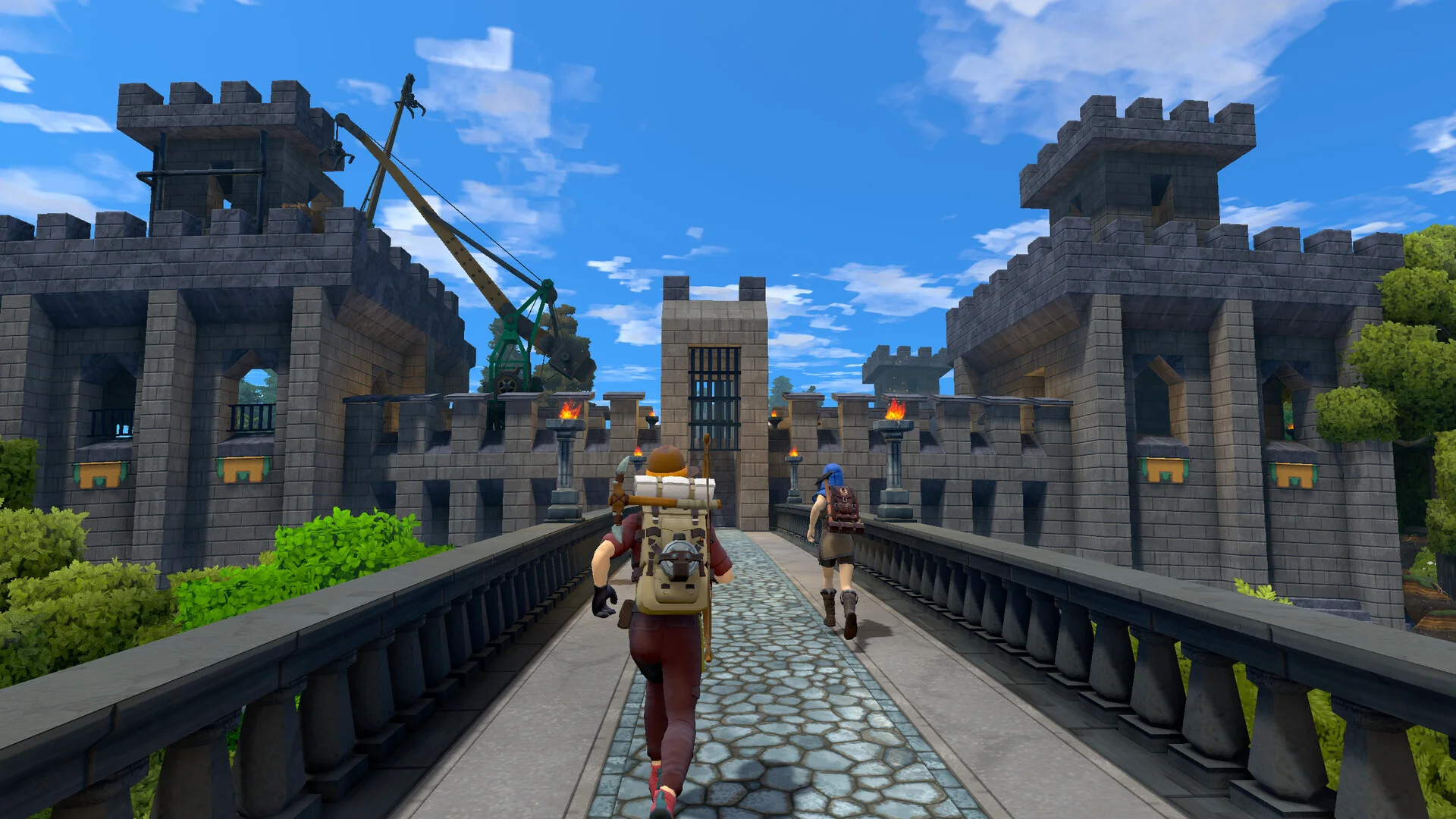
World size lives in WorldGenerator.eco, and it is the most irreversible setting on the whole server. Changing it later regenerates the world, which means everything your group built is gone. Decide once.
The default is 72x72, roughly 0.52 km2, and dimensions should stay divisible by 4. That default is genuinely fine for a group of up to about ten people. The instinct to go bigger is usually wrong: a large world with a small population spreads everyone so far apart that no economy ever forms, roads take a week to build, and you carry the simulation cost of terrain nobody ever visits. Scale up when you know you have the players to fill it, not before.
One more trap worth knowing: Eco rewrites its config files when the server shuts down. Edit configs while the server is stopped, or the running process will overwrite your changes with its own state.
The Meteor Clock Runs in Real Time
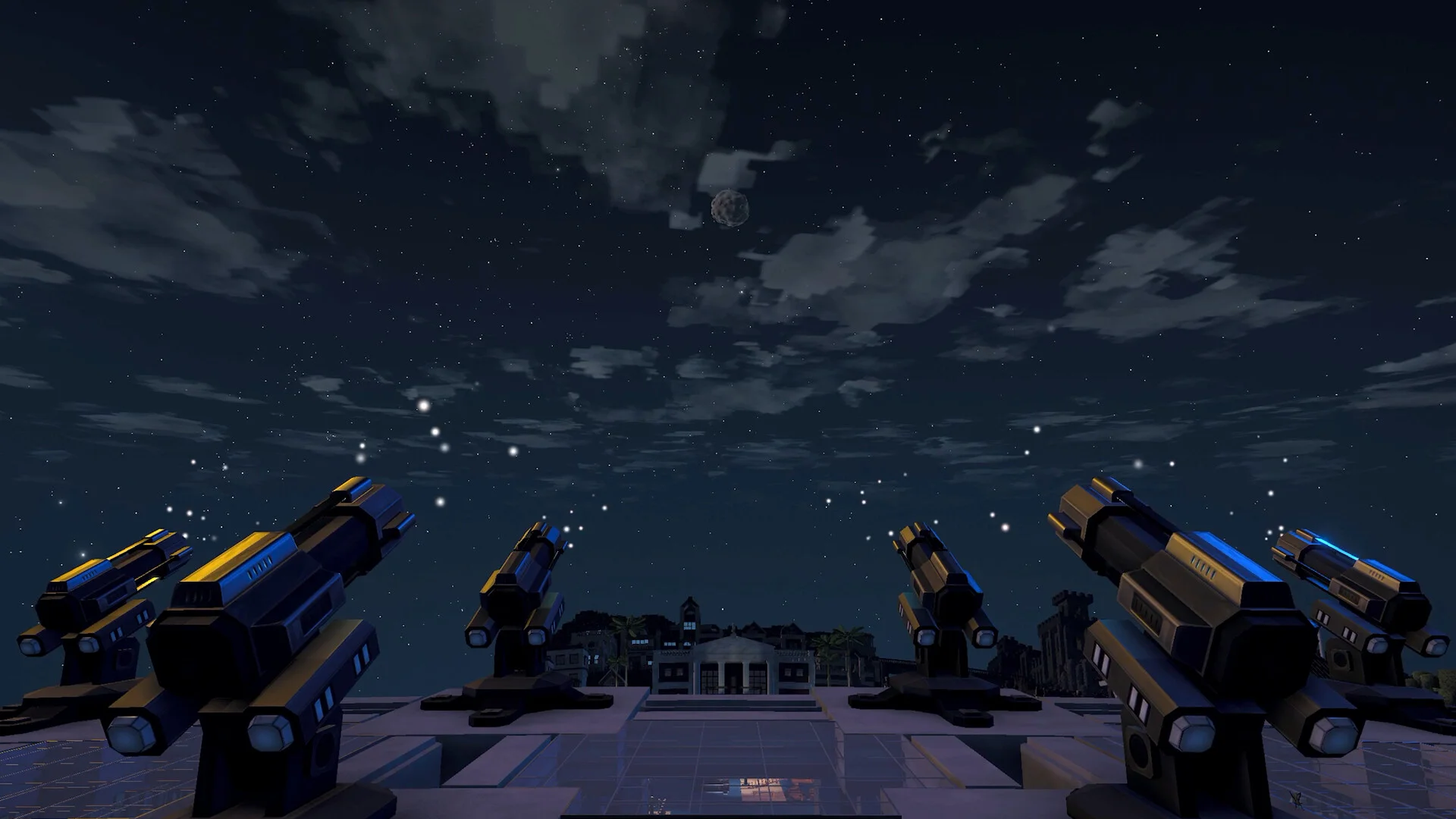
Disasters.eco holds MeteorImpactDays, which defaults to 30.0. That number is real days, counted from the moment the server first started, not hours anyone spent playing. A group that plays two evenings a week will reach impact having barely scraped into the industrial age, which is how a lot of first Eco servers quietly die.
So pick deliberately:
- Keep 30 days if you have an active group that plays most days and you want the deadline to create pressure. It is the intended experience and it is genuinely good.
- Extend it to 60 or 90 days for a casual group. This is the setting most private servers should actually be changing.
- Disable it if your group wants a permanent building and economy sandbox with no ending at all.
Whatever you choose, tell your players the date. Half the tension in Eco comes from everyone knowing exactly how long they have left.
Government and the Economy Are the Real Multiplayer Feature
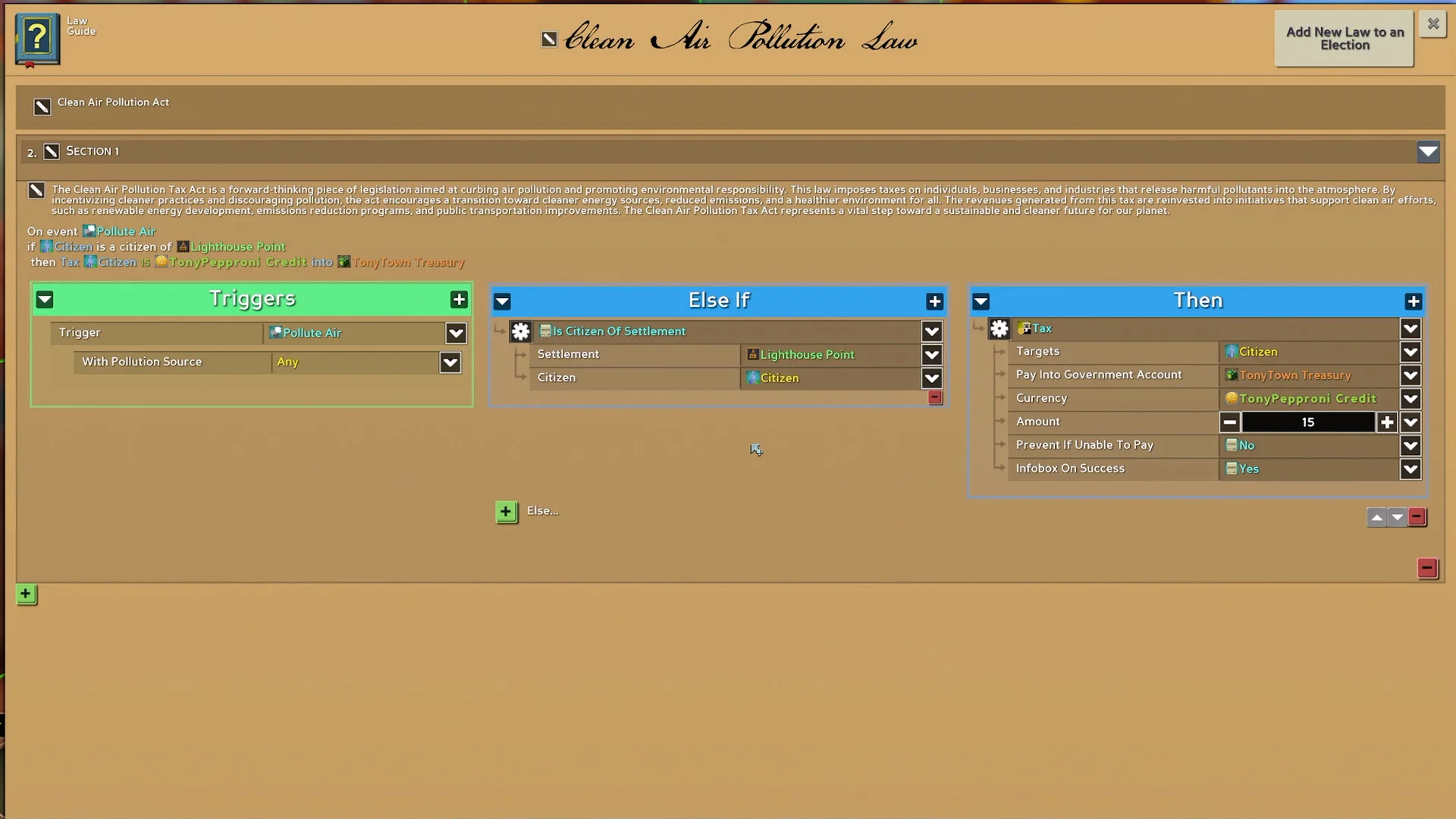
This is the part people underestimate before their first server. Eco ships an elected government, a law editor that turns rules into behaviour the game actually enforces, taxes, player created currencies, and shops with player set prices. A law capping pollution per settlement is not roleplay. It stops the action.
Server side, the pieces that shape this are small but worth setting on day one. Network.eco carries the server name, the description and whether the server is listed publicly. Our egg also exposes a server category (Beginner, Established, BeginnerHard or Strange), which is how browsing players judge whether they are walking into a fresh world or an established civilization with 60 laws already on the books. Administration happens through the server's own web interface on its dedicated port, or with /serverui in game.
This is also why hosting quality matters more here than in most games. A contract, an election or a stocked shop is state that other people are relying on. Downtime in Eco costs more than downtime in a game you can simply rejoin.
Mods Will Break on Update Day, So Plan For It
Eco mods do not live on the Steam Workshop. You install them by hand: .dll mods go into the Mods folder or a subfolder of it, and .cs source mods go into Mods/UserCode. That structure matters because of what happens on update day.
Anything in Mods/UserCode is very likely to break when the server version changes, and a broken source mod does not fail quietly. It can throw compile errors that stop the server from starting at all. The reliable pattern:
- Back up the world before every update, without exceptions.
- Do not carry your mod folders across a version migration. Redownload each mod for the new version instead.
- If you run mods, turn automatic updates off and update on your own schedule, once you have checked that the mods you depend on have caught up.
Can You Rent an Eco Server for Xbox or PS4?
No, and it is worth stating plainly because the question comes up constantly. Eco is a PC title from Strange Loop Games and there is no console version, so there is nothing to host for Xbox or PlayStation. Everyone joining your server is playing on PC.
Free hosting is the other recurring question, and Eco is close to the worst possible fit for it. A world that has to stay up continuously for 30 or more real days, keeps simulating while nobody is online, and is sensitive to single core performance is exactly what free tiers with idle shutdowns and shared, throttled CPUs handle worst. Losing a month old world to an expired free plan is a poor trade for the money saved.
If you want the world to survive its whole season, Eco server hosting that stays online while your civilization sleeps is the part worth paying for. Get the world size right, decide what the meteor is there for, and the rest is just the game doing what it was built to do.