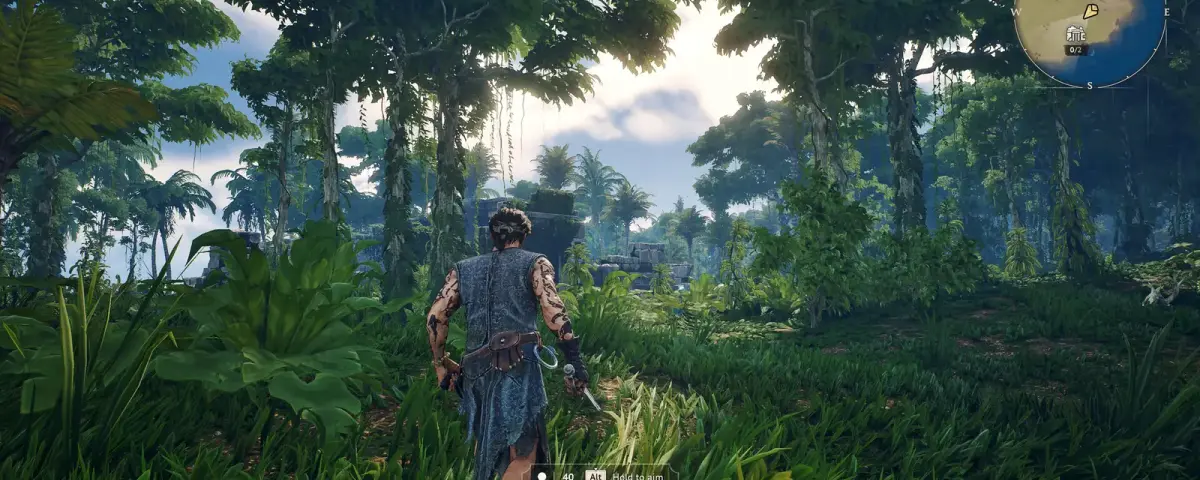
TL;DR: Build your first Windrose base in the Coastal Jungle near a multi-zone shoreline that has palm cover, a sheltered U-shaped cove for your ship, and copper ore within a one-screen walk. Move your main production hub to the Foothills once you can craft iron tools, ideally on the seam where Foothills touches Coastal Jungle so you keep early-game resources accessible. Skip the Cursed Swamps for a permanent base. Use it as a forward outpost only.
Why Base Location Decides Your Whole Run
Windrose is procedural. Every world has roughly 30 islands and 90+ hand-crafted points of interest, but they shuffle into a different map every time. That means there is no single "best coordinate" to copy off a YouTube guide. The thing that travels across maps is the type of location: biome edges, harbor shape, resource proximity, distance to faction POIs, and how raid traffic moves on the surrounding sea routes.
Pick wrong and you will spend the next 10 hours running back and forth between your base and the nearest copper vein. Pick right and you can speedrun the Coastal Jungle boss (Thomas Richards) inside a single evening and have an iron-tier setup before your friends finish character creation.
This guide walks the three biomes in progression order, the terrain principles that override biome choice, and the multiplayer and dedicated server tips that gaming-press listicles tend to skip.
How the World Generates: Biomes and Island Types
Windrose has three named biomes. Most starter and mid-game decisions revolve around the first two.
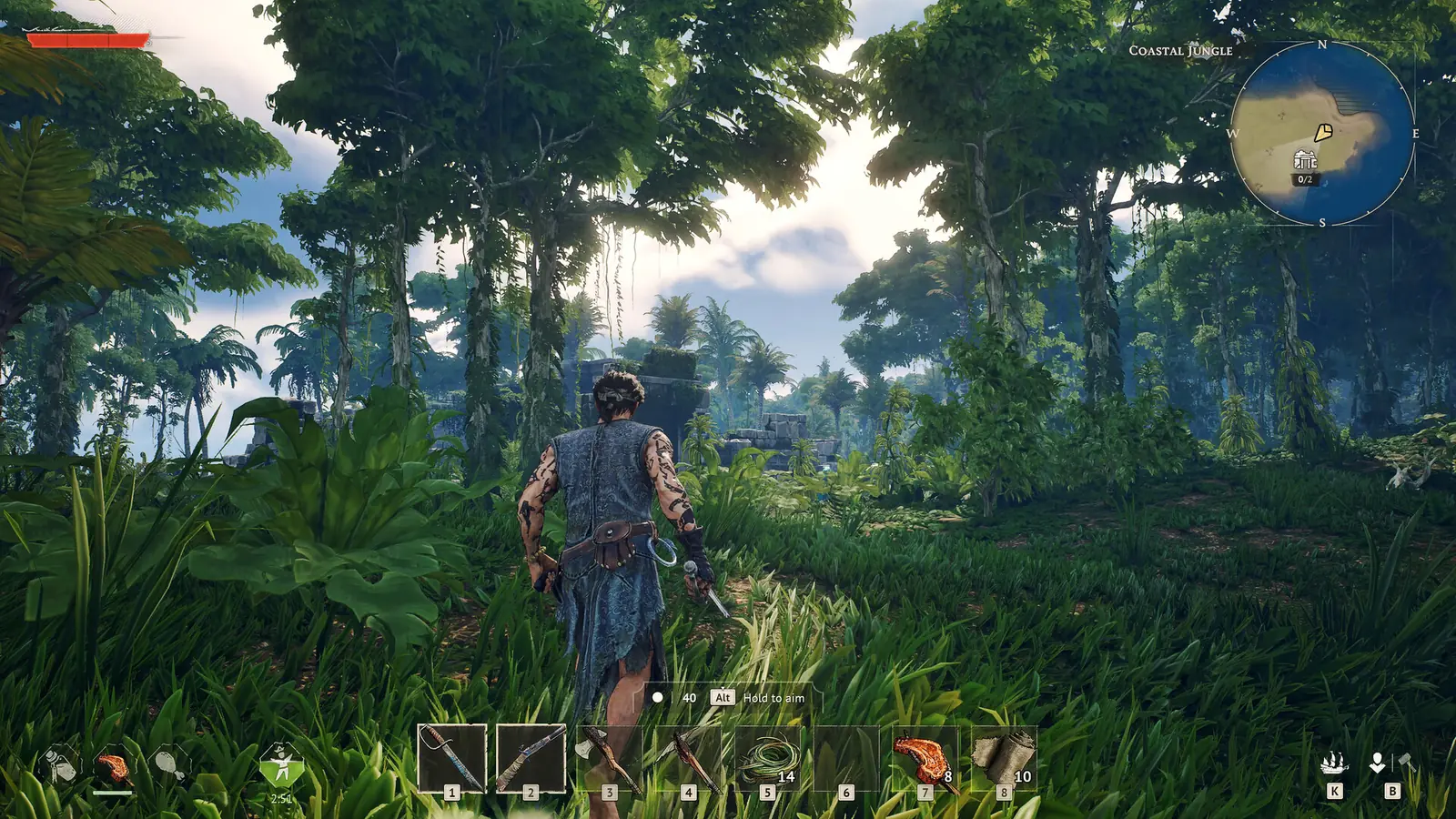
- Coastal Jungle (early game): palms, vines, and beach shorelines. Key resources are copper ore, clay, rough hide, and misty orchid. Boss: Thomas Richards.
- Foothills (mid game): rolling hills with iron deposits, hardwood, tree bark, flax fiber, corn, sulfur, and fertile soil. Boss: Israel Hands. Hand-crafted POIs include Ancient Village and Ancient Farm landmarks.
- Cursed Swamps (late game): pink plague-forest patches, ancient scraps, tar, plague wood, crocodile hide, bromeliad.
Layered on top of the biomes is a layout of windrose islands that come in different shapes and sizes. Some are tiny single-resource rocks, others are sprawling multi-biome continents where one shoreline is jungle and the next ridge over is Foothills. Those multi-biome islands are the goldmine: more biome variety per square meter, less sailing per gathering trip.
Coastal Jungle: The Smart Starter Biome
Almost every new run should plant its first base in Coastal Jungle. Three reasons:
- Copper ore is the gatekeeper to every tier-2 tool. Without copper you do not get bronze tools, decent weapons, or the bench upgrades to fast-travel and craft sails. Coastal Jungle is the only biome where copper spawns at surface density.
- Thomas Richards is the gate to faction reputation. The fight happens in a Coastal Jungle cave. Living within a couple of minutes of his arena lets you re-attempt fast.
- Predator density is the lowest of the three biomes. Foothills has wolves and large boar; Cursed Swamps is hostile by design. Coastal Jungle has alligators near water but they are easy to avoid on the inland palm shelves.
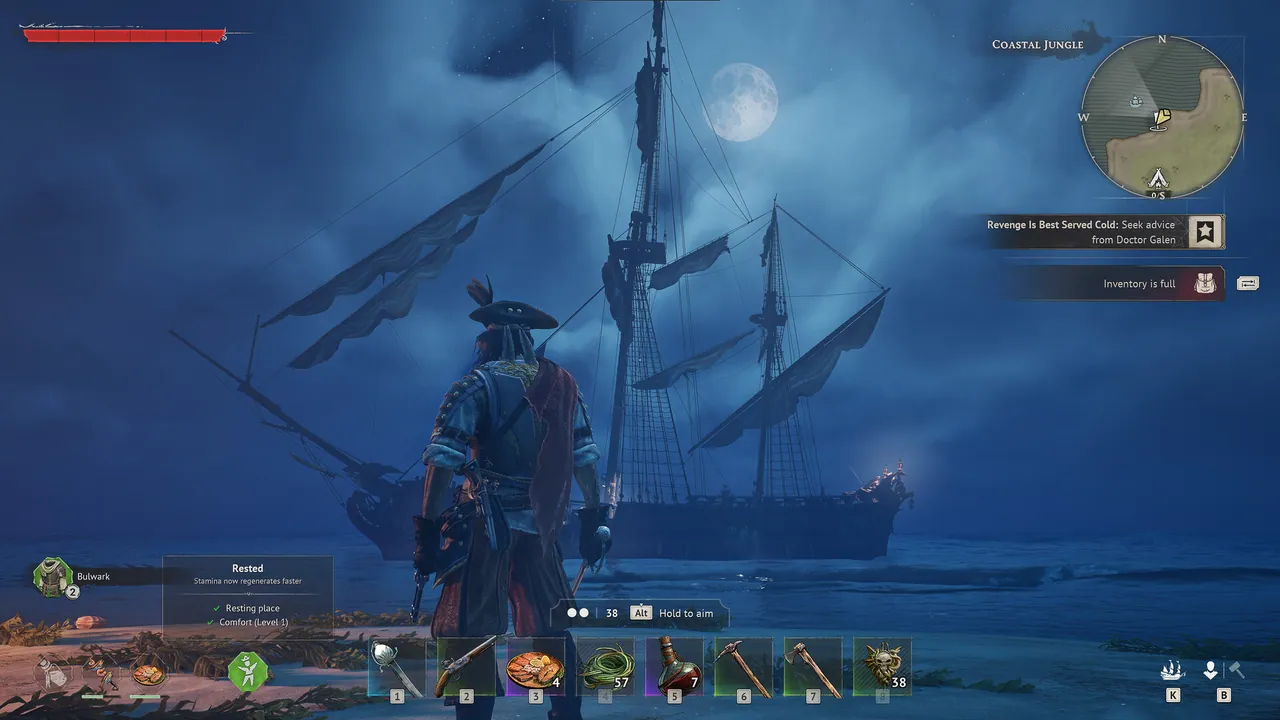
The ideal starter spot is a palm-shelf shoreline with a U-shaped cove. Drop your campfire (which is the base anchor the crafting system reads chests from) on the flattest piece of ground that backs onto a rock wall, with the cove visible from the build zone. The rock wall blocks ambient predators from one side, the cove lets you anchor your ship without it drifting on tide, and the palms give wood and rough hide without leaving the build radius.
Avoid the temptation to live on a flat beach. They look great in screenshots but become chaotic when you start stacking foundations, smelters, drying racks, and a stable. Two builds in you will be re-laying foundations on uneven sand.
Foothills: The Mid-Game Production Hub
Once you have iron tools and the Thomas Richards encounter is cleared, you have a choice: tear down your Coastal Jungle base and rebuild in Foothills, or set up a second base.
Build the second base. Do not tear down the first.
The Foothills give you iron, hardwood, sulfur (gunpowder), flax fiber (sails and armor), corn (food sustain), and fertile soil for proper farms. Israel Hands is the boss here and his cave traffic is heavier than Coastal Jungle, so a Foothills base benefits from cliffs and plateaus for line-of-sight rather than waterline cover.
The single best Foothills location is a plateau that overlooks an Ancient Farm or Ancient Village POI. Those POIs respawn faction enemies and resources on a server-side timer, which means a base within sprinting distance gives you near-continuous loot rotation without sailing. The elevation gives you visibility on incoming faction patrols and (importantly) a height advantage with muskets.
If you can find a multi-biome island where Foothills touches Coastal Jungle on a single shoreline, plant your hub on the seam. You get iron production and palm/copper access without two separate sailing trips.
Cursed Swamps: Outpost Only
Do not live in the Cursed Swamps. The plague-forest patches damage you over time, the late-game enemies will demolish low-tier walls, and the resource density (ancient scraps, tar, plague wood, crocodile hide) is fixed: you get the same loot whether you sleep there or sail in.
What does work is a stripped-down forward outpost: a campfire, a chest, a bedroll, and a small stockpile of crocodile-hide repair kits. Build it on the edge of a swamp peninsula where you can park your ship safely in clean water and sprint in for raids. The campfire as base anchor matters here: it lets you transfer ancient scraps into a chest the crafting system can pull from at your main base. Treat it like a logistics drop, not a home.
Terrain Features That Beat Biome Choice
Biome matters, but terrain matters more once you are placing foundations. Five features punch above biome:
- U-shaped cove or natural harbor. Your ship stays anchored, you do not lose it to tide drift, and you can build docks that snap clean to the shoreline. This single feature is worth more than picking the right biome.
- Biome overlap (seam islands). Building between two biomes cuts gathering time in half. Coastal Jungle plus Foothills is the strongest combo.
- Cliffs and plateaus. Improve defense and visibility on faction patrols. Worth a 10-minute scout before placing your campfire.
- Proximity to an Ancient Village or Ancient Farm POI. These are loot-rotation engines. Within 60 to 90 seconds of run-time is the sweet spot.
- Wood and stone inside the campfire build radius. You will reinforce walls more than you expect. Drag-and-drop building only feels good if the trees and rocks are inside the chest pull range.
Multiplayer: Where to Plant the Shared Base
Windrose co-op (which the community guides reference as a group of four players) has specific mechanics that make base location different from solo:
- Faction reputation is shared from the host. If the host already has high favor with a faction, every joiner inherits it on connect. Build the shared base near POIs your host already has reputation with: the patrols will not aggro and you can use the area as a safe staging ground.
- Chests are instanced per player. No one steals from your stockpile, which means each player can run their own sub-stash within the base radius. Plan for four campfires in one compound rather than one giant central chest.
- Boarding gold is per-player, not split. You and your crew each get the full reward from a ship boarding. The base location should make it easy to relaunch from harbor between raids: a U-shaped cove with a clean exit to a Buccaneers' Waters route is ideal.
- One world, one host's machine. If your host's PC goes offline, the world goes with it. This is the hosting moat we cover in the next section.
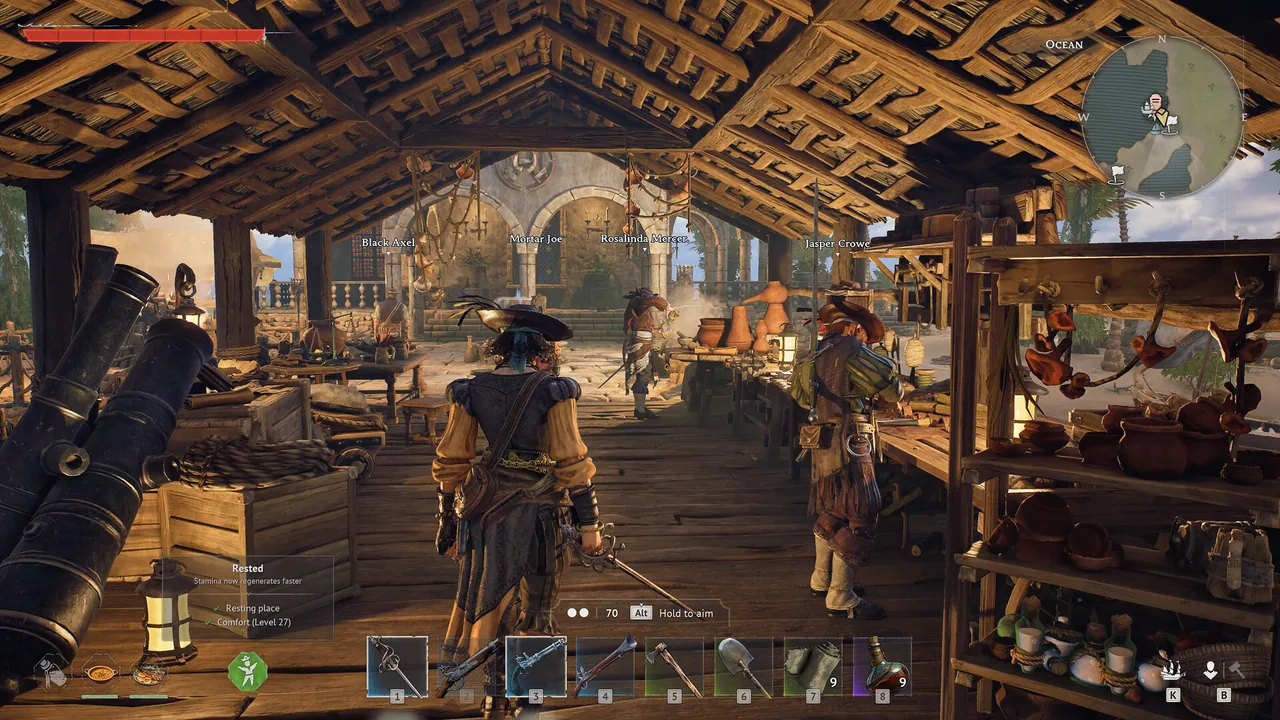
The classic multiplayer mistake is everyone scattering across the map building their own villas. That feels cinematic at hour two and is misery by hour ten when no one can find a shared smelter. Pick one Coastal Jungle island, draw a 50-meter circle around the campfire, and require every player's personal build to stay inside it.
Dedicated Server Tips (Where Hosting Actually Helps)
Most base-location guides assume peer-to-peer hosting (one player's PC is the server). That has a real cost: when the host logs off, the base, the chests, and the in-progress sailing pause. Resource POIs do not respawn on their server-side timer, and friends in different time zones cannot play.
A dedicated server changes a few base-location decisions:
- Live 24/7 means POIs cycle continuously. Ancient Village and Ancient Farm respawns happen on a server-side timer. With a dedicated host running, a Foothills plateau next to a Farm becomes a passive resource generator that ticks while everyone sleeps.
- Sub-bases on multiple islands actually persist. On peer-hosted runs, sub-base loot reloads on the host's next session. On a dedicated server your forward outpost in the Cursed Swamps keeps its stockpile across sessions.
- FTP access to save files unlocks multi-world setups. Run a competitive raid map and a co-op build map on separate slots, and copy player builds between them with FTP.
On DoomHosting we run Windrose on Ryzen 9 hardware with 24/7 uptime, full FTP access, and one-click world resets when you want to roll the procedural map for a new layout. The single-host bottleneck (someone has to be online for anyone else to play) goes away.
What to Avoid
- Flat beaches. Look great in early screenshots, become a foundation-jenga nightmare at scale.
- Predator-heavy interior zones. Wolves and large boar in inner Foothills make daily resource runs miserable.
- Single-biome isolated islands. No matter how scenic, a one-biome rock will eventually force daily sailing for whatever it lacks.
- Cursed Swamps as a permanent base. Plague damage is constant, and your walls will not hold against late-game enemies.
- Dead-end terrain. Cliffs with no exit route lock you in if a faction patrol catches you mid-gather. Always pick a spot with at least two land routes out.
Host Your Windrose Server with DoomHosting
Tired of waiting for a friend to come online before you can sail? DoomHosting's Windrose servers run on Ryzen 9 hardware with instant setup, full FTP access, DDoS protection, and 24/7 uptime, so your shared base stays alive while you sleep. Procedural map rolls, multi-world slots, and one-click backups are all included.
Sail safe, build smart, and pick the cove.